Choosing a Tripod

Abstract: There is no single perfect tripod. Get a big/sturdy one, and get a small/travel one. For the same money it cost to buy something crappy new, you can buy very good quality used. [This post was updated Feb. 7, 2020]


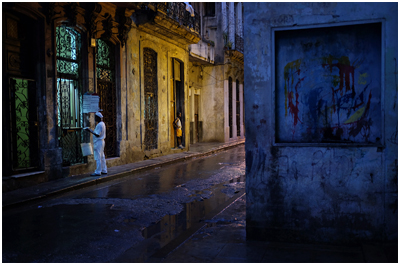
For lighting photographers, the first thing to consider about a tripod is this: a tripod is your most powerful light.
Read more »


__________

New to Strobist? Start here | Or jump right to Lighting 101
Now available in audiobook: The Traveling Photograher's Manifesto


Permalink

Traveling Photographer_DUBAI has Ben Posted


For those following The Traveling Photographer project (more info on the whole project here) the Dubai episode has just been posted.

-30-


__________

New to Strobist? Start here | Or jump right to Lighting 101
Now available in audiobook: The Traveling Photograher's Manifesto


Permalink

Education: Gear for Your Brain

A great photo book (whether lighting or otherwise) is an amazing value. You get to rent someone else's brain for the price of a good dinner. And depending on who's brain you're renting and what you do with the info, the return on investment can be hundreds or even thousands of time what you invested.

The Strobist Recommended Book List is small, but well-considered. It includes just four books on lighting, a book on the interpersonal aspects of photography and a massive, magnum opus that for the right people will prove invaluable.
Read more »


__________

New to Strobist? Start here | Or jump right to Lighting 101
Now available in audiobook: The Traveling Photograher's Manifesto


Permalink

Choosing Cases and Carts

Abstract: a selection of case recommendations based on whatever lighting gear you need to lug around. (This post was updated on 2/29/20.)


Location Speedlights

Most of you will end up using two small lights with stands and mods and a modest bag of camera gear. Not that there's anything wrong with that. You can do a ton of cool stuff with two speedlights. I have gone far past that level of gear in the past, and often to my regret.

If that's you, grab the shoulder-slung camera bag of your choice. Then augment it with this:


The LumoPro Padded Lighting Case is cheap ($30), lightweight, protective and perfect for a two-speedlight lighting kit. It'll carry two compact stands, speedlights, mods and various doo-dads perfectly.

Note, it might feel a little big if you are using a one-light kit. After all, a one-light, all-compact kit could probably fit in a chess bag. But the various additional "necessaries" all take up space. Or if you want to bring along a full-sized stand, or a larger light mod like a 60" Softlighter, you'll appreciate the extra room.


Camera Systems


For traveling with cameras, for protection and convenience I'd take a serious look at ThinkTank bags.

Basically, you can't go wrong with ThinkTank. They are fantastic: well-researched, well-designed and well-built (and frequently updated by the thinking photographers who design them.) I have several, absolutely love them and I recommend them without reservation. You can get anything from an SD card wallet to a rolling coffin.

For a mirrorless system + laptop backpack (not a roller) I'd strongly recommend ThinkTank's Airport Essentials case, which is pictured just above. As a Fuji shooter, it is my desert island gear carrier. It's by far my most-used travel case.

As a Fuji shooter love that I can shove this bag full of gear and it will still fit under the seat in front of me. That's a godsend as it means that I can travel with carry-on luggage only a large percentage of the time.

Here's another thing I love about it: It's also the perfect size to curl up with on a plane in coach. Just put it on your lap, wrap your arms around it and rest your head atop it on that Toys-R-Us pillow they give you. That's the best way I know to sleep in coach on a plane.

If you are a DSLR shooter, you might want to step up to something a little bigger/deeper. But for those of us who have made the switch to mirrorless, the Airport Essentials is perfect.

Big or small, I could not recommend ThinkTank cases more heartily. They are all solid choices. And again, as far as capacity they go pretty much from "mirrorless cameras" to "I need to move a body."


A Backpack for Studio Lights


As the only soft-side backpack designed expressly for carrying studio lights, the Paul C. Buff backpack deserves a mention. For anyone who shoots PCB lights, the pack is sized to fit a pair of AB's, Einsteins or DigiBees. And like most things Pall Buff, it is refreshingly affordable at $90.

For those using one or two lights against the sun, this presents a very mobile option. (If you shoot other brands, it would be worth a Google to see if anyone has sized or adapted it to fit your lights.)


Studio Invasion


I hesitate to even bring this up. But one day you may find yourself looking at a pile of bags and light stand slings and rollers and you may start thinking, "I need a cart to do all of this in one trip."

Let me first say that I do not envy you. And second, also say that I have been there myself. Not full-blown McNally-ladened, but too much to carry in one trip. By a long shot.

When that day comes, you'll start thinking about a folding cart. And rather than endure all of the mistakes (and wasted money) that I did, I am going to suggest you go straight to a Rock-n-Roller MultiCart.

Why MultiCart? Solid build, folding, expand to a big size if needed, can be a dolly, can hold a board to double as a digital tech's desk on set—you name it. They rock. And roll.

They make several sizes, but I recommend either the R-8 (smaller) or the R-12 (bigger).

If you have not yet heard of them, that is because they were originally designed and marketed for the music industry. (Those guys hump a lot of gear around, too.) But increasingly, they have been adopted by backache-plagued photographers everywhere.

They are highly functional, versatile and built like tanks. Either of these will likely be the last cart you ever buy.

As a bonus, you will likely (and hopefully) use them more around the house than you even do for work. At least I hope so. Because it kinda sucks to travel with that much gear in tow every day.

But if you are gonna, this is your cart.


Back to Gear Guide Main Page


__________

New to Strobist? Start here | Or jump right to Lighting 101
Now available in audiobook: The Traveling Photograher's Manifesto


Permalink

Choosing Hard and Specialty Modifiers

Abstract: It's not all umbrellas and soft boxes. Restricted hard lights and ring lights — sometimes in combo! — are great tools to have at your beck and call. [The post was updated on Feb. 7, 2020.]

We tend to start out using soft light at a 45-degree angle because it is an easy fix, and it's hard to go seriously wrong doing that.

But there are all kinds of light mods, and often choices other than default soft three-quarter light can be more interesting. My favorites are snoots, grids and ring adapters.


Snoots are like little tunnels you attach to your flash to block part of the light beam. Snoots are not rocket science. We are just blocking some light. And remember, we're just blocking light from the flash. In the photo above, blocking the flash helped to let the ambient add a layer to our photo. (More about how it was made, here.)

And cardboard works just fine to create tight zones of light when doing a photo like this.

For grid spots, which work like snoots but have a much more beautiful fall-off to the edge of the light, you can DIY them out of straws but it is a pain in the ass and not really worth the effort for many. My advice? Get a 1/8" universal grid spot for $10 and be done with it. They will last forever (seriously, they're indestructible) and they fit all speedlights.

I'd nix the velcro mounting system, however. Mod it with elastic for quick changes and you'll be good to go.
__________


A less expensive (but flash-specific) alternative are the DIY-ish grids from SaxonPC. (Seen above, more info on those here.)

Also in the specialty mod category are speedlight ring flash adapters. They turn your small flash into a donut of light that can give you a beautiful, shadowless look for key or fill. After the demise of the Orbis, my current favorite is the RoundFlash.

For the record, I have owned five different commercial ring flashes (and adapters): Profoto, AlienBees, Ray Flash, RoundFlash and Orbis. With the demise of the Orbis, I recommend the RoundFlash for (speedlight-based) portable, and the AlienBees ABR800 for those needing more power.

Whatever you do, avoid the Chinese knockoffs of the Ray Flash. They are light-sucking pieces of junk, and are rarely anywhere near color correct. But they are cheap!

Seriously, if you're that broke you'll be better off home-brewing a cardboard DIY ring flash adapter for the time being.


Back to Gear Guide Main Page


__________

New to Strobist? Start here | Or jump right to Lighting 101
Now available in audiobook: The Traveling Photograher's Manifesto


Permalink

Choosing Soft Modifiers


With the gazillion or so soft light mods out there, it is easy to be overwhelmed by the choices available. And while I have probably shot with more of them that I would care to admit, there are four soft mods that I go back to again and again.

As it happens, these four are reasonably priced, too.
__________


Soft is Relative

So, which of the light sources above is the softest? The one in the back, right?

Not necessarily. The 60" source in back is not as soft at 10 feet away from your subject as the 8x9" source is at 10 inches away. A good rule of thumb to remember is that a light source is soft when it looks large to your subject. This nets out the two variables of size and distance.

Example: Even a bare speedlight looks soft to a subject only a couple inches away.

Long story short, if you want soft light you will have to consider the working distance at which you'll be using it. The further back your light source, the larger your light mod will have to be.

So front to back, here is the straight dope on the four mods pictured above.


1. A Pint-Sized Soft Box


After an umbrella, one of the most useful softeners a mobile photographer can own is one of the several "mini" soft boxes on the market. I've rotated throughout several models over the years, but my current favorite is the Altura 11x8" mini soft box ($23).

At 8x11", the box can feel soft — as long as you are working the light close to the subject. Case in point, the portrait above of Cuban National Team boxer Osmany Barcelay at the Rafael Trejo boxing gym in Havana.

Photo by Martin Howard

With a flat front edge, the light is easy to feather. This means you can work in the edges of the beam for more interesting (i.e. uneven) illumination. In the photo below, the light is barely a foot from his face, feathered toward the camera to avoid edge spill on the left:


Mind you, both of these photos are shot outside in broad daylight. But I am shooting with a leaf-shuttered Fuji X100F, which means I have no upper speed limit on my flash sync. This magic little combo means that I can absolutely murder sunlight with a close-in, small-flash setup.

Pros: The Altura 11x8" is small, and folds flat. This means it travels great, hiding in the back flap of my Domke F3 or just about anywhere else. It is well-built, double-diffused and gives off nice, even light without any hotspot. It is also shockingly cheap, at $23 shipped.

Cons: It can be a little floppy on the flash. But you adjust in the way you hold it. (I usually just hand-hold it, connected via an OCF cord.)

Its small size means it is literally soft in only in the knife-fight range. Back it up more than a couple of feet and it starts to get hard. Actually, I tend to use this to my advantage, making the light more versatile just by varying the distance. That is one of the reasons I use it so much.


2. Beauty Dish


The next step up, size-wise, gets us to a beauty dish. A broad, shallow reflector, it throws a modestly soft light at portrait distances. There is nothing particularly "beautiful" about it. The dish just has good PR, I guess.

A light this size won't wrap as much as a giant octa or umbrella when used at the same distance, which can be a good thing. So while some people may think of it as a beauty dish, I tend to think of it as a character dish.


Again, I almost always use it with fill. The shot above (more here) is a good example.

When used with a giant, on-axis fill light, the beauty dish really starts to live up to its name. The shadows from a dish are distinct, and controlling their depth with another light source gives you a wide range of possibility.

Beauty dishes come in both reflective silver and matte white. Silver is more efficient, but white gives you a better quality of light. My suggestion: go with white and move it closer to your subject if you need the extra oomph.

Pros: A dish gives you soft(ish) light that can stand up to a breeze. Soft boxes and (especially) umbrellas can turn into a sail in even a light wind. The beauty dish will hold up in a moderate wind -- especially when sandbagged. Also, the fact that the dish is circular gives a signature shape on the face as compared to a rectangular soft box. Some people prefer this, but I find it kinda arbitrary.

Cons: Does not fold in any way, so it travels like crap. Expect to have to buy a protective case for it. Which only adds to the next downside. Of the four sources listed here, the beauty dish is usually the most expensive. Also, despite the various configurations you tend to see out there, dishes do not work well with speedlights. They need the powerful, bare-bulb type light from a protruding tube in a studio light — and the little "light blocker" which ensures no direct light from the bare tube reaches your subject.


3. 43" 3-in-1 Umbrella


Recommended as the first soft light mod for any space- or budget-conscious photographer, the double-fold umbrella practically disappears in your bag. It collapses down to about 15". And even better, they are also very cheap.

I started out using umbrellas in typical fashion, 45 degrees up and over, as do most photographers. These days I am much more likely to fly it over the top of a subject, as in the falconer shot seen above:

Photo by Bobbi Lane

Pros: Hello … it's dirt cheap. Also, it travels extremely well. If you are into super-portable lighting, this is your mod. Also a shoot-thru umbrella can be very powerful, if used right up next to your subject. This is something you cannot do with a reflected umbrella because the shaft can get in the way.

Cons: Careful, as some of them can be pretty fragile. The LumoPro model is built significantly better than is the more ubiquitous Westcott model.

Another nod to the LumoPro 3-in-1: as the name implies, it can be used three different ways. It works as a shoot-through umbrella, a black-backed white reflective umbrella and a reflective silver umbrella — which gives you three very portable looks on the cheap.


4. Photek 60" Softlighter


Combining the best features of a shoot-through umbrella and a large soft box, I like to think of the large Softlighter as a poor man's octa.

It is a convertible shoot-through umbrella that can double as a reflective one due to the removable black backing. And it comes with a very efficient diffuser screen, turning the umbrella into a wonderfully even light source. As a bonus, the umbrella shaft is segmented, so you can remove half of it after you open it. This makes it possible to use it in very close. It is large-octa light quality, for about $149.

How good are they? Even people who can afford to use any expensive mod they want frequently opt for the affordable Photeks. If you are an Annie Leibovitz fan, she frequently uses them as her key light, as seen here:


Pros: Way cheap, as compared to the octa it largely replaces. Versatile as an umbrella, as described above. Gorgeous light with the diffuser. Very lightweight -- easy to boom without expensive gear. Takes a speedlight well.


(A Photek 60" is how we lit the photo above, as detailed here.)

Cons: They are not as heavy-duty as an octa -- but to be honest I have yet to kill one. Also, the front is not a clean light source like an octa. You can see the strobe unit. So if you are shooting highly reflective objects (glass, etc.) this may not be for you.
__________


So those are my Four Horsemen of soft light. I have bought (and shot with) a lot of soft mods over the past 35 years, but those are the ones I keep going back to. I highly recommend each, for the reasons above.

The main thing is to look at your working distance and see which light source will create the light you want at that distance. Fortunately, as you can see above, you don't have to spend a ton of money to get versatile, soft light.


Back to Gear Guide Main Page


__________

New to Strobist? Start here | Or jump right to Lighting 101
Now available in audiobook: The Traveling Photograher's Manifesto


Permalink

Choosing Light Stands

Abstract: Which light stand(s) you choose will depend on how you'll be using them. Light stands are not very expensive, and you can generally benefit from having a spare one around. [This post was updated Feb. 7, 2020.]

Light stands are designed to oppose gravity. Pretty simple. And the designs are, for the most part, pretty similar. I think of light stands as being in three categories: normal stands, compact stands (seen just above) and specialty stands such as C-stands.


For light stands I like LumoPro for many of the same reasons I like the LumoPro LP180 speedlight. Their stands are well-built, reasonably priced and guaranteed out the wazoo. LumoPro has good service, too, should you need to replace a broken knob or bolt or whatever.

Honestly, it makes me wonder why other manufacturers don't warranty their grip gear like this. Seems like a no-brainer, if you are making good stuff.

For normal, full-sized stands, I like the 10-foot LumoPro LP608. It is air-cushioned, has a five-year warranty and costs $45. It is a solid value choice and you can certainly spend more but get less.

Most stands are pretty interchangeable. That's not to say that there aren't some cool designs to be had. For a "splurge" light stand I'd consider Manfrotto stackers. They have a unique design that allows them to snap flat together for easy transport and space-saving storage. They are more expensive ($84 for 8-foot version and $115 for the 12-foot) so you'll have to make that call. But they are a great upgrade if you frequently lug around a flock of light stands.

If you don't need all of that functionality, skip the stackers. In fact, many speedlight folks who don't need a lot of stand height prefer to use "compact" 5-section stands. They rise to about 7 feet and collapse to about 21".

For that, my recommendation is easy and clear-cut: get the LumoPro LP605s, seen above. (The stand has since been updated to the LP605s, which includes drilled legs and a carrying strap.) It is the best-built of the five-section stands, includes ground spikes for more stability in wind and has LumoPro's outsized warranty.

For $45, it is hard to go wrong here. There are more expensive versions of this, but they are not as well-built, aren't strapped, have no ground spikes and you won't get a five-year warranty either. Done deal.


C-Stands


As far as C-stands go (more on what they are, here) they are pretty much all built like tanks. Which is part of their weighty charm. LumoPro C-stands ($100 for the riser and another $35 for the arm—make sure to get both pieces) are a good value choice as they back up the build quality with their five-year warranty.


And Be Smart: Buy Some Sand Bags


While we are on the subject of stands, please do this: Take $17 (for 4) and buy some sand bags. Get the bags from Amazon. Four will do you well for many small shoots.

And the first time a stand fails to blow over because you had it properly (and cheaply) secured, they will have paid for themselves.


But Don't Use Sand.

Skip the sand, as it will probably leak in your car or screw up the zippers. Rather, use "pea gravel," from your local home improvement store. It's super cheap ($3.50 worth will fill three sets of sandbags) and way less messy than sand.

You won't need these cheap insurance policies until a stand comes down in the wind, breaking your flash or your mod or your subject's noggin. Then you will have needed the sand bags retroactively.

Start with four or so. You'll probably end up getting more as you go. Cheapest insurance (and piece of mind) policy you'll ever buy.


Back to Gear Guide Main Page


__________

New to Strobist? Start here | Or jump right to Lighting 101
Now available in audiobook: The Traveling Photograher's Manifesto


Permalink

Choosing Remote Triggers

Flash triggers are basically radio remotes. They are way to synchronize your flash when it is not attached to your camera and make it fire when you press the shutter.

For a long time, you had to spend a lot of money ($200+ per set) to get good, reliable remotes. But technology (and competition) has advanced to the point where that is no longer the case. In fact, the recommended remote trigger for beginners (and really, most photographers) is only $55 a set.


Recommended Basic Remotes: Phottix Ares


Hong Kong-based Phottix has separated itself from the other Far East-based lighting companies and has built a great reputation. They have first-tier distributors in the West, responsive factory service and industry-leading warranties. These qualities separate Phottix from all of their Far East peers.

Phottix' Ares remotes, at $55 for the set, give reliable performance, are hot shoe-based (for easy mounting/connections) have eight channels and run on readily available AA batteries. The standard caveat is for Sony users*, as some of Sony's flashes and cameras have oddly proprietary flash connectors. (If that is you, see footnote at bottom.)

The Ares comes with a factory warranty of one year, which is doubled to two years if you register them at Phottix' website.

For the last three years, I have taught beginning lighting courses at Gulf Photo Plus. The standard issue in the class lighting kit is the Phottix Ares. That's over a hundred sets being ridden hard for at least a full day, by beginners, with nary a hiccup to report. I have since switched to using them as my personal remotes.

The range is good enough for all but the most extreme situations, and can be extended by positioning both the transmitter and receiver in the vertical orientation. (Which makes the antennae happy.)


The set comes surprisingly well equipped for the price, with lanyards and a variety of cords/adapters to marry to any flashes that may not be hot-shoe based.


They even include a nice, fitted case—with a pocket sufficient to hold a spare set of AA's, should they be needed. A nice touch—especially in this price range.

Caveats are few and minimal. They do not automatically turn off if you leave them on. So you could run out a set of batteries if you forget. They are not weatherproofed, so far as I can tell. But that's nothing a pair of small plastic baggies wouldn't cure.

Other than that, nothing. Just a solid, reliable remote with good build quality, performance and warranty, for a great price.


More Sophisticated Remotes

These days, more expensive remotes are offering much more than just the ability to trigger your flash off camera. They can work wirelessly in TTL mode. They can power flashes up or down. You can remotely adjust lighting ratios.

But in choosing an advanced remote, you are also marrying the flash system it is to be used with. Because the flashes also have to have the advanced compatibilities built in—or require specific "smart" receiver units mounted to the flash.

So any choice of an advanced remote system is going to be made in the context of choosing an entire flash system, just as your need for certain lenses might drive your choice of camera systems.

For example, the Phottix Odin II is a remote trigger that offers sophisticated control of your flashes from the camera's position. Several speedlights and larger flashes have Odin-compatible receivers built in: LumoPro LP180R and Phottix Mitros+ speedlights, and the more powerful Phottix Indra flashes. And you can't consider the Odin II without considering the flashes it is married to.

Ditto the similarly capable Paul C Buff Cyber Commander and the Elincrom SkyPort remotes, each designed to work with their respective company's studio lights. If considering them, you should view the decision to buy them as part of a larger decision of which flash brand to marry.


Camera Manufacturers' Remotes

Maybe you already have speedlights branded to your camera system—like Nikon or Canon, for instance. Yes, those companies will also sell you their own remote. But as with the flashes themselves, you will pay a premium every step of the way.

You can generally get better value with third party remotes and flashes.


Dip a Toe In First

My advice for most people is to just start with a decent manual remote. In a nutshell, that is why I recommend beginning with an inexpensive (but still good quality) simple remote such as the Phottix Ares. At ~$55, it is hard to go terribly wrong. And depending on how you use your lights, it may well end up being all you ever need.


Back to Gear Guide Main Page

__________


*SONY USERS: Sony makes good cameras. But the people who design their flashes are proprietary poopheads. Seriously, they have, at times, chosen non-standard shoe mounts for their flashes. And even when they went for a more standard(ish) mount, it sometimes does not fit. These people, mind you, are the same ones who tried to force us to go with Betamax tapes and Memory Sticks. Sigh.

This means, if you use a Sony camera and/or flash, you should talk to a knowledgeable camera dealer before buying lighting gear that may well not fit.

Poopheads.


__________

New to Strobist? Start here | Or jump right to Lighting 101
Now available in audiobook: The Traveling Photograher's Manifesto


Permalink

Choosing a Small Flash

UPDATE, 2/5/2020: The long-recommended LumoPro LP180 is no longer being manufactured. The current recommended flash is here.
__________


Because small lights and big lights each bring a different set of considerations to the party, I am splitting my recommendations into small flashes (AKA speedlights) and big lights (AKA studio lights).

For speedlights, your first choice is deciding whether you wanna drive stick or automatic, meaning manual or TTL. I live in manual mode, which means I sacrifice some convenience for both better value and rock-solid reliability. Also, I am not held captive to "TTL tax" every time I buy a new piece of lighting gear.

Because if you want to maintain those TTL capabilities as you expend, you have to go with gear that works on that more complex, branded platform. In other words, once you're in, they pretty much have you where they want you.


Top Pick for Manual Speedlights


For manual speedlights, I recommend the LumoPro LP180, about which I go into far more detail here. It's built like a tank, syncs four different ways, has a fluid and intuitive user interface, a built-in gel holder and has a two-year manufacturer's warranty.

My favorite feature on the LP180 is, at the time of this writing, unique to LumoPro speedlights: it has a tripod female mount on the side of the flash. This may not sound like a big deal, but that thoughtful gesture allows us to put the flash very close to the shaft of a lighting umbrella — which will improve the quality of the light as compared to any other speedlight.

Alone, each of the above features are a nice extra touch. Together, they combine to make a value-priced manual speedlight that is head-and-shoulders above the competition.

That it costs about a third as much as you would pay for an OEM branded flagship TTL flash is icing on the cake. If you can commit to shooting manually, this is your flash.

A NOTE ABOUT MANUAL-ONLY FLASHES

A well-designed, manual-only flash has a zen quality to the user interface that no feature-ladened "Swiss army knife" flash could ever have. Because the latter has to include TTL controls and a built-in (brand-captive!) remote, and the various additional group and channel controls that implies.

So you can expect that TTL/remote-embedded flash to have menu trees, which is the natural enemy of fluid interfaces.

You know what's nice? Having a flash that I can reach up and dial in another 1.3 stops, while also tightening the zoom from 35mm to 50mm, without even looking at it. Because it is just up-down/left-right buttons, and that is super easy to do by feel without skipping a word in the rapport you are trying to build and keep with your subject.

If I could sum up the state of the art in small flashes in the past few years in two words, it would be "feature creep." You may think this is a good thing. But I really don't need a flash with Bluetooth® to tell me when my coffee is done. And while we are not there yet, at the current pace we probably will be soon.

The upshot of all this "progress" is that almost certainly, purpose-built manual flashes with lovely, intuitive user interfaces will be going away soon. The LumoPro LP180 is the last, best one out there. And even it won't be around forever.


Choosing a TTL Speedlight

TTL (as opposed to manual) stands for "through the lens" automatic control of the power output of the flash. It is a nice capability, but it is certainly not a necessity. In fact, I use manual about 100% of the time. But you might be different. If you chase your kids around the living room with a camera and flash or shoot parties and receptions, for instance, TTL can be a nice convenience to have for those occasions.

Just know that what you'll be giving up is a simpler, more intuitive set of controls. Even in manual mode, you're going to be navigating more menus and pushing more buttons while shooting.

If you are going the TTL route, at least do this: avoid your camera manufacturer's branded flash. They tend to be very good flashes, but they are insanely overpriced. For example: a single Nikon SU-5000 speedlight, with the Nikon radio needed to fire it remotely, will set you back over $700.

Welp, I guess that's just how much good flashes cost, right? NOPE. For that much money you could have gotten:


• (2) Godox TT685 manual/TTL/radio-enabled flashes, branded to your camera platform ($110 ea.)
• a Godox XPro series remote transmitter, branded to your camera platform ($70)
• (2) LumoPro LP605s strapped compact light stands ($45 ea.)
• (2) LumoPro LP679 umbrella swivel adapters ($16 ea.)
• (2) LumoPro LP735 3-in-1 compact umbrellas ($30 ea.)
• LumoPro 32" padded lighting case ($30)

This is a fantastic little portable two-light studio, with both manual and wireless TTL capabilities. The included LumoPro studio gear is warrantied for 5 years. And you have still have nearly $200 left over, compared to the price of one Nikon speedlight with a wireless transmitter.

¯\_(ツ)_/¯

Look, in 2019, we have been conditioned to pop off a little web research and head straight to Amazon. And Nikon would certainly love for you to go that route. But this is an instance where it really makes sense to pick up the phone and talk to someone knowledgeable to walk you through your options. (And no, that someone is not me.) Because the options are very camera brand-specific, and flash models are getting updated all the time.

In the U.S., try Midwest Camera Exchange in Columbus, Ohio: (866) 940-3686. Ask to speak to someone about small flash gear. Tell them, "I have [X] kind of camera, and I am interested in doing [X] kind of lighting work and I have [X] budget. What do you recommend and why?"

Just as in the example above, you'll likely end up with more appropriate gear, for less money.


How to Choose the Right Batteries

You roll your eyes, but I'm serious. While all AA batteries will work in your flash, some will work way better than others.

First, you shouldn't use alkaline batteries. In addition to being far less environmentally friendly than rechargeable batteries (and in the long run more expensive) they straight up do not work as well.

That's because alkaline batteries, while having a voltage of 1.5 volts each, do not deliver energy to your flash as fast as nickel-metal hydride (NiMH) rechargeable versions. NiMH batteries only have 1.2 volts, but still deliver current to your flash faster because of the internal chemistry of the battery.

Think of it as having a water hose with a wider diameter. Even with less pressure (i.e. voltage) it can push more water (i.e., current).

Second, some NiMH batteries are better than others. Always look for the words "pre-charged" on the label. And no, we do not care that they arrive pre-charged. But that designation also indicates that the batteries are the slow-drain variety.

That's right, some NiMH batteries will lose their charge by themselves as they sit on your shelf doing nothing. It's like having a glass of water but the glass has a small hole in the bottom.

As long as your batteries are NiMH and slow-drain, the only other variable is their capacity. That is measured in milhiamp-hours, or mAh.

I like to have 8 batteries (two full sets) for each flash. Since I can charge one set faster than I can drain the other set down, it's basically like having infinite power resources.

Here are two good value recommendations (AmazonBasics), with differing mAh capacities:

8 AA NiMH Slow-Drain Batteries, 2400 mAh

8 AA NiMH Slow-Drain Batteries, 2000 mAh


...And Charge Them Right


As for keeping your batteries charged, there are things to know there, too. First, NiMH do not have memory issues like older rechargeable batteries. So feel free to top them up any time.

But charging rates (i.e., how fast your charger can top them up) will affect the lifespan of your battery.

Yes, you can charge your batteries in 15 minutes with some chargers. But that needs a lot of current, and generates a lot of heat. And those unnecessary thermal cycles will shorten your battery's life.

If you ask your battery, it would much prefer to be charged slowly, over a period of four hours or so. But since you often don't have that kind of time, a good compromise is to go for a 1-2 hour charger.

Or better yet, one that you can switch between 1-2 hours, or 3-4 hours at the touch of a button. I use the Powerex charger shown above. It'll let me choose the rate for charging, charge two full 4-battery sets at once, and costs less than $40.


Back to Gear Guide Main Page


__________

New to Strobist? Start here | Or jump right to Lighting 101
Now available in audiobook: The Traveling Photograher's Manifesto


Permalink

Choosing Lenses

Abstract: A rational approach to choosing lenses without breaking the bank. [This post was updated on Feb. 7, 2020.]


If you date your cameras, you marry your lenses. That's because, unlike digital cameras, a well-chosen lens can serve you for a very long time.

I still have one lens that I bought thirty two years ago. And I bought it used. I doubt that will be the case with any of my digital cameras, ever.

In the past, I was a lens speed freak and was willing to spend great sums of money to have very fast glass. I now realize that lust was misplaced. If I had it to do over again (and I do, and have) I would lean more on prime lenses clustered around modest focal lengths. Here's why.

Moderately fast primes are (much) lighter, (much) cheaper and often just as sharp (or sharper) than their speedy siblings. For Nikon shooters, the Nikon 28, 50 and 85 f/1.8 trio of lenses are great examples of this. They weigh next to nothing in your bag and offer great performance.

Also, I have moved away from primarily using fast zooms. Rather than a fast 24-70/2.8, I'd now opt for a trio of fast-ish primes and a decent, slower zoom to back them up.

As compared to the speed zoom, the primes/slower zoom combo gives you a stop (plus) faster at each focal length and backups throughout the 24-70mm range. And you lose the most daunting aspect of the speed zoom: an expensive single point of failure. (From someone who has experienced exactly that, trust me, it is a sickening feeling.)

In general, remember this when it comes to ultra-fast DSLR lenses: you pay through the nose for them when you buy them. And then you pay again, in weight, every time you lug them around. Cameras have amazing high-ISO performance these days. And they are just going to get better as we go.


As for my Fuji lenses, it is pretty hard to go wrong with their primes. They are small, gorgeous and fast. I love the built-in 23mm (35 equiv.) of the X100 series. It's sharp wide open and it has beautiful flare when you point it right into the sun as seen above. It's my most-used lens. Which is a good thing, given that it's welded to my most-used camera.


Painted Hall, Greenwich, UK with Fuji 14mm/2.8

Along with that, the 35/1.4 (50mm equiv., seen at top on left) and 14/2.8 (21mm equiv., on right) are my go-to lenses on the interchangeable lens Fuji bodies. If I am shooting tight headshots, maybe the 56/1.2 in the middle.


Actor Ben Lurye, with Fuji 18-55 f/2.8-4

As a backup for the lot, I like the 18-55mm f/2.8-4.0 kit zoom (not shown, but used to make the portrait above). Although not a speed lens, it is great optically and has stabilization.

Good performance from a kit lens (the zoom that often comes packaged with a camera) is not a given, as many of them are crap. If you are using a kit zoom as your main lens, know that it will be be sharpest near the middle of the aperture scale—let's say around f/8. In fact, most lenses are great at f/8.

If you like to hang out close to wide open, grab a (used, if necessary) prime at your most-used focal length. You'll be a happy camper—and have a backup if needed.
__________


What to buy? And when?

Your purchases should be driven by what/how you shoot. Here's my thinking on lens progression, driven by how I shoot.

Most of the time I am going to go out with a single, prime lens. I like the size, the weight, the speed and sharpness. Actually, I also like the discipline of having a single focal length. It helps me to see better.

With a new system I'd build out my wide/normal/short-tele primes, then get a decent wide- to short-tele zoom as a backup or for times when I would want one-lens variability. Only then do I start going for more exotic lengths if needed.

One exception: If the camera/kit zoom combo is a very good deal, I might reverse that order: zoom fist, them primes.

The reason is simple: most of my work will be done with the bread-and-butter focal lengths of moderate wide to short tele. So I want good quality, speed and backup in those lengths before I start to get crazy with a superwide or whatever.

You can easily try out a lens for no risk. Buy a good example used, from someone with a good return policy. If the lens is a dog, return it immediately. If it is good enough to where you want to keep it and play, you can always resell the used lens for about what you paid for it within a year or two.

So, very little risk. (In fact, if I was going to need to rent a lens for more than a week I'd do it this way instead.) Your rental would be practically free.

And obviously, if you love a lens and decide to marry it and keep it forever that's best possible case.

Lastly, above all, don't get sucked into the mindset where that next lens, the one you don't have yet, will make you a great photographer. It won't.

The best simplified advice I can give on lenses is to find a good example of a given focal length lens that fits your vision, and drill down until you can master it. Fair warning: that can take a lifetime.


Back to Gear Guide Main Page


__________

New to Strobist? Start here | Or jump right to Lighting 101
Now available in audiobook: The Traveling Photograher's Manifesto


Permalink

Choosing a Camera


There is no perfect camera. Get that idea out of your head right now. Every camera is a compromise. Size, speed, image quality, low-light performance, price, etc., can be features or liabilities.

As you start to rank your priorities, the universe of appropriate cameras will narrow itself for you:


• If you value best-possible image quality above all, sell your car/house/kidney and buy a digital medium format camera. Or go back to film and shoot large format.

• If you need long/fast glass and/or very high speed (sports, nature, etc.) that'll send you towards Nikon, Canon or (lately) Sony and a super-telephoto lens.

• If you shoot portraits, speed and high ISO performance might not matter as much as gorgeous color.

• If you travel frequently, you'll likely put a premium on your cameras being small and lightweight, with good low-light performance.

• If you are following a toddler around the living room, continuous autofocus performance may trump price. (Or maybe you're just feeding your ego. That toddler will slow down in a few years and maybe the money is better spent on jumpstarting their college fund than on a flagship DSLR.)


So first, think about your priorities and your budget, then begin your search for cameras using that as a compass point.

And nowhere is it written that you have to buy brand new gear. If I were just starting out I'd strongly consider a late-model used digital camera and a used lens or two. If I was not happy, it would be a cheap marriage to unwind. Within a year I could probably sell the lot on eBay for a $100 less than I paid, or maybe break even.

Another idea: buy used from a shutterbug friend who is upgrading, knowing the camera implicitly comes with some informal tutoring. (And a good outlet to borrow/lend lenses, bodies, etc.)

The good news is, most any system-oriented digital camera made in the last few years is probably sufficient for the needs of most photographers. Digital cameras have gotten to be fantastic lately.


My Decision Tree


I spent over 30 years with Nikon film and digital SLRs as my primary cameras. But the further I got away from shooting for newspapers (which at the time had included lots of sports and breaking news photography) the more my priorities shifted. Here is what is important to me now:

• small and unobtrusive (I don't want to look/feel like light infantry)
• great image quality
• great in low light (when the quality of light is often way better)
• whisper quiet

That led me to move to mirrorless cameras a few years back — specifically, Fuji's X-series. In the last six years, I have accumulated a core group of lenses (some new, some used) and periodically upcycled my cameras as funds permitted.

Pictured at top are the cameras that currently get more use than anything else I have (save maybe my iPhone): a Fuji X Pro-2 and a Fuji X100F. I chose them because they produce better color than anything I have ever owned. They are small, lightweight, dead quiet and thrive in low light.

If your priorities are different, they might lead you to a different set of choices.


PSSSST:

Here's a largely unspoken truth in the hype-soaked atmosphere of digital cameras today: they have gotten to a point where the near-monthly improvements are mostly Nth-degree stuff and one-upsmanship. As a result, people tend to churn their cameras frequently.

But because of that, a late-model used camera can be a good deal. And the model before that can be a great deal.

Whether you buy new or used, embrace this concept of impermanence. If you shoot a lot you probably won't be using the same camera in five years that you are today.


Whatever camera style/brand (new or used) you are considering, you can use the 'net to easily scope out how other photographers are using it and what kind of image quality it has. This is especially true when wading into the universe of used cameras.

Shocker: you'll find that people were making really good photos a few years ago with gear that, three years later, is surprisingly affordable.

New or used, keep a level head and an eye on the big picture. Resist the hype. Focus on how you will be using the camera and what features are truly most important to you. Then let that drive a more rational choice for your needs.


Back to Gear Guide Main Page


__________

New to Strobist? Start here | Or jump right to Lighting 101
Now available in audiobook: The Traveling Photograher's Manifesto


Permalink